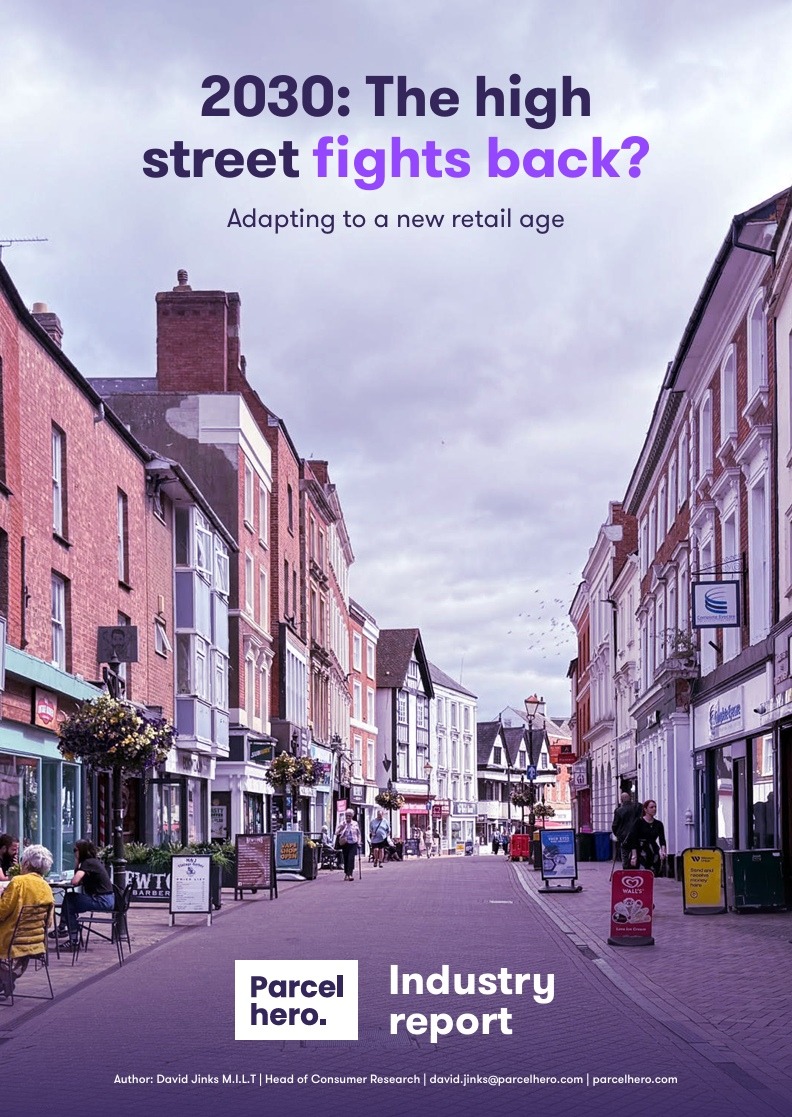
Parcelhero’s landmark 2016 report, 2030: The Death of the High Street, predicted a dramatic transformation of UK town centres driven by the rise of online shopping. Now, with 2030 just four years away, the delivery specialist has released a follow-up study, 2030: The High Street Fights Back? Adapting to a New Retail Age, assessing whether its earlier forecasts have materialised or if physical retail is mounting a recovery.
David Jinks M.I.L.T., Parcelhero’s Head of Consumer Research and lead author of both reports, reflects on the findings: “When we released our first study, 2030 seemed a long way off. With just four years remaining, now is the ideal time to see if our town centres continue to wither on the vine or if there are green shoots we didn’t foresee ten years ago.”
Despite hopes for a turnaround, the new report paints a bleak picture. “That question mark in the title is not there for nothing,” Jinks warns. The original forecast anticipated 100,000 store closures by 2030, but since 2016, an estimated 122,682 physical stores have already shut their doors.
The report confirms the demise of many iconic retail names. Since 2016, household brands such as Jaeger, Toys R’ Us, Maplin, Mothercare, Thomas Cook, Debenhams, Beales, Laura Ashley, Harveys Furniture, McColl’s, Paperchase, Homebase, Ted Baker, Oddbins, and Lloyds Pharmacy have disappeared from town centres or entered administration. This year alone, Claire’s, The Original Factory Shop, Russell & Bromley, and Quiz have also fallen into administration by April.
Department stores have been particularly hard hit. House of Fraser entered administration in August 2018, with Sports Direct acquiring the business but reducing store numbers from 59 to 23. Debenhams, once boasting 165 department stores, closed all physical locations by June 2021 following liquidation, although Boohoo acquired the brand’s online presence. Beales, which operated 23 stores in 2019, has now shuttered all of them. Overall, over 83% of UK department store space has vanished since 2016.
Clothing retailers have also suffered extensive closures. The Arcadia Group alone shuttered over 200 stores. Other well-known names entering administration include L K Bennett, Karen Millen, Jack Wills, Cath Kidston, Oasis, Warehouse, Quiz, TM Lewin, Edinburgh Woollen Mill, Topshop, Dorothy Perkins, and Burtons.
Traditional town centre newsagents, stationers, and tobacconists have declined sharply. The report notes that even WHSmith, once a stalwart, could not survive on colouring books alone. Its struggling High Street stores were sold to Modella Capital and rebranded as TGJones. Paperchase went into administration in January 2023, with its products now only found in Tesco stores. McColl’s has also disappeared from the High Street.
Bank branches continue to vanish, confirming the earlier prediction that online banking would reduce physical locations. Since 1989, around 9,000 bank and building society branches have closed, with approximately 6,660 more shutting between 2016 and 2025. Further closures are expected.
However, not all forecasts have been accurate. The report highlights that independent bookshops, once thought to be nearing extinction, have shown resilience. While the traditional book retail sector declined by 2.3% annually, the number of independent bookshops remains close to 1,052, indicating a revival.
Online retail growth has been significant. In 2016, online sales accounted for 14.2% of total retail spending. Parcelhero’s original prediction that online would reach 40% by 2030 seemed ambitious. Yet by February 2021, during the Covid pandemic peak, online sales surged to 35.6%, nearly reaching the forecast nine years early.
Nevertheless, the pandemic created an e-commerce bubble that has since burst. Many online retailers overestimated sustained growth post-Covid. This led to setbacks for major players: Ocado fell out of the FTSE 100, Asos and Boohoo faced difficulties, and food delivery firms like Jiffy, Gorillas, and Getir disappeared. Missguided also entered administration in 2022 after an unsuccessful expansion.
Despite the decline from the 2021 peak, online sales remain substantially higher than in 2016, holding about 28% of the market as of February 2026. The report notes that the predicted 40% share by 2030 remains uncertain.
There are some positive signs for the High Street. Convenience stores have been the fastest-growing category in 2024, with large supermarket chains expanding smaller-format outlets. Coffee shops have seen more than one net opening per week, and cake shops have also increased in number, suggesting parts of the High Street may have a promising future.
While 122,682 physical stores closed between 2017 and the end of 2025, this figure does not represent a net loss, as some new shops have opened. However, closures outnumber openings, particularly in key sectors like department stores, threatening the survival of certain High Streets and shopping arcades.
Parcelhero concludes that the High Street has not reached a dead end by 2030 but faces its most significant crossroads yet in this evolving retail landscape.
The full report is available at https://newsroom.parcelhero.com/the-high-street-fights-back-final.pdf.