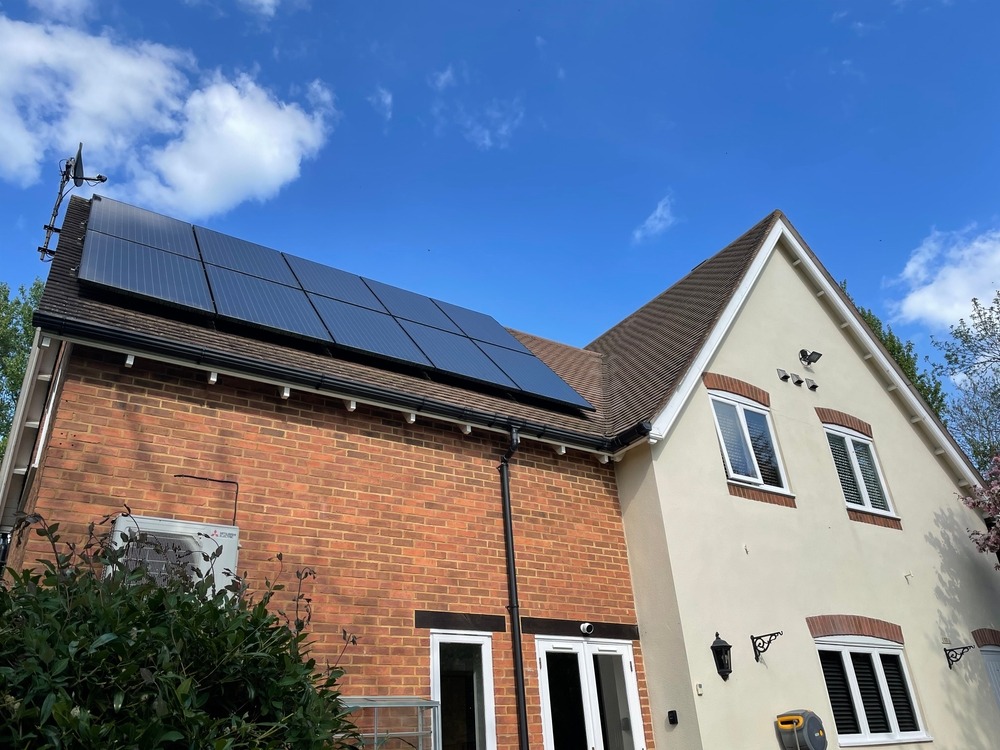
UK households face steep energy costs, with the average annual bill exceeding £1,700. Many are seeking solutions to reduce these expenses, and solar panels are frequently highlighted as a viable long-term option. Depending on the size of the system and household energy use, solar installations could save between £300 and £500 each year.
Despite these potential savings, the majority of UK residences have yet to adopt solar technology. This reluctance is partly due to the withdrawal of government grants such as the Green Homes Grant, which previously helped cover installation expenses. Currently, no widespread public funding exists to assist homeowners with the typical £5,000 to £8,000 cost of installing solar panels.
While schemes like the Smart Export Guarantee (SEG) enable homeowners to earn money from surplus energy generated, and the Energy Company Obligation (ECO4) offers support, these are mainly targeted at low-income households or those receiving specific benefits. This leaves a significant portion of working households without financial aid, creating a gap between the long-term financial benefits of solar and the upfront affordability.
Scaling solar panel installation across the UK’s housing stock presents further challenges. Applying solar technology to millions of homes would require investment running into tens of billions of pounds. The question of who should bear these costs—homeowners, property developers, or the government—remains unresolved. Without a national mandate or clear funding strategy, solar panels continue to be viewed as optional rather than standard features.
Catherine Storer, an industry professional at Essential Site Skills, highlighted this issue: “Households are being encouraged to become more energy efficient, yet many of the most effective solutions still come with a significant upfront cost. It raises a simple question: why aren’t solar panels standard on new homes?” She added, “The technology is there, the savings are proven, but without stronger support or requirements, adoption is still falling short of where it could be.”
Currently, solar panels are not compulsory on new build homes across the UK, despite growing emphasis on sustainability. This omission means many new properties lack integrated renewable energy systems, potentially locking future homeowners into higher energy bills. Industry experts increasingly view this as a missed opportunity to embed energy efficiency at scale.
Advancements in solar technology, particularly when combined with battery storage, are transforming how households manage energy. Some homeowners can now store excess electricity and sell it back to the grid via schemes like the SEG or utilise smart tariffs to maximise earnings during peak periods. This evolution shifts solar from merely a cost-saving tool to a potential long-term energy asset, though public awareness of these benefits remains limited.
Demand for renewable energy solutions is rising rapidly, but the sector faces a shortage of skilled workers to install and maintain these systems. Catherine Storer noted, “We’re seeing growing interest in renewable technologies across the industry, but there’s still a gap between awareness and action. As demand increases, the sector needs the skills and infrastructure in place to support it.”
With ongoing financial pressures on households and the UK’s commitment to net zero emissions, solar energy is poised to play a more significant role in the country’s housing future. However, without clearer policy guidance, enhanced incentives, or changes to building regulations, widespread adoption risks lagging behind both consumer demand and its potential benefits.