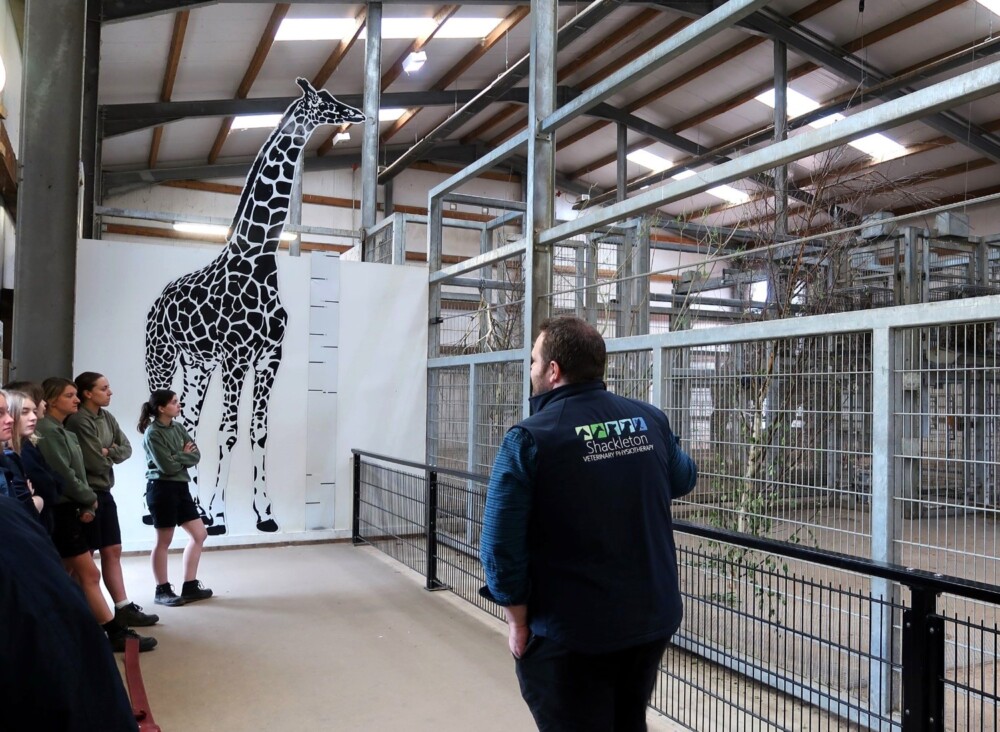
In a groundbreaking effort to enhance the well-being of captive animals, a leading expert in animal therapy conducted a hands-on workshop for students and zookeepers at the renowned Yorkshire Wildlife Park. Matthew Shackleton, a Chester-based veterinary physiotherapist, zoo consultant, and animal care practitioner at Coleg Cambria Northop, shared his expertise on lameness and enrichment devices with a diverse group of attendees.
The workshop, held on the park’s premises in Branton, near Doncaster, commenced with a morning session dedicated to theoretical discussions on physiology and the identification of locomotive illnesses that can restrict an animal’s quality of life and movement. Shackleton, accompanied by Richard Morrilly, Cambria’s Animal Care Coordinator, delved into practical solutions to prevent and mitigate these conditions.
Among the participants were learners from Lincoln College’s Animal Management programs, eager to gain insights from Shackleton’s extensive experience in the field.
“It was a really good day, we covered a lot and were able to come up with bespoke, practical solutions for the animals while there on-site,” said Shackleton, the owner of Shackleton Veterinary Physiotherapy in Upton. “After discussing locomotive illnesses and diseases – focused on four species, including lionesses and giraffes – we began designing enrichment devices that would encourage certain movements or exercises as animals can face a series of issues, notably arthritis.”
Shackleton emphasized the importance of promoting positive behaviours and movements to counteract the detrimental effects of captivity. “Evidence suggests if practices are detrimental to the animal, it can accelerate deterioration, so encouraging other behaviours can keep that at bay,” he explained.
The workshop’s success was facilitated by the support of Cambria, which provided the necessary tools and resources for the participants to design and create enrichment devices tailored to the animals’ needs. Shackleton expressed his gratitude, stating, “Cambria was a great support in providing tools and resources for us to do this, and all in all it was a very useful and informative day, hopefully the first of many at zoos and wildlife parks nationwide.”
Shackleton’s expertise in animal physiotherapy is widely recognized, having worked with zoos in Chester, London, Paignton, and other locations across the UK over the past decade. His involvement with Cambria’s Animal Management and Animal Care courses is a unique selling point, offering students and wildlife settings across the country access to his specialized knowledge.
“Matthew is one of just a small group of people in the UK doing this, so it’s a privilege for us to have him on board,” said Richard Morrilly. “Being a part of the day and helping to create devices in the animals’ own environments was fantastic and will play a big role in enriching their day-to-day lives.”
The workshop’s success has already garnered positive feedback, and plans are underway to visit other zoos and wildlife parks in the near future. The educational value and positive impact on the health, happiness, and well-being of the animals make these collaborative efforts invaluable in the field of animal care and conservation.